Why Roofing Marketing Is Different in 2026
The roofing industry has changed. Gone are the days when a truck, a ladder, and word-of-mouth referrals were enough to build a thriving roofing company. In 2026, roofing marketing is the difference between a business that grows predictably and one that scrambles for the next job.
Homeowners start their search online. They research roofing materials, read reviews, compare contractors, and make decisions before they ever pick up the phone. If your roofing company isn't visible, credible, and compelling online, you're losing jobs to competitors who are.
This guide covers everything you need to know about roofing marketing in 2026 — from lead generation and advertising to SEO, web design, and reputation management. Whether you're a solo roofer or running a multi-crew operation, these strategies will help you generate more qualified leads and close more jobs.
Understanding the Roofing Customer Journey
Before diving into marketing tactics, it's critical to understand how homeowners make roofing decisions. The customer journey typically follows this path:
- Awareness: The homeowner notices a problem (leak, missing shingles, aging roof)
- Research: They search online for solutions, materials, and local contractors
- Comparison: They evaluate 3-5 roofing companies based on reviews, website quality, and pricing
- Decision: They request a quote or inspection
- Action: They hire a contractor and schedule the work
At every stage, your marketing needs to be present. If you're not showing up in search results, you're invisible during the research phase. If your website doesn't build trust, you lose during comparison. If your lead response is slow, you lose the decision phase.
The Role of Roofing Lead Generation
Roofing lead generation is the engine that drives your business. But not all leads are created equal. The goal isn't just more leads — it's more qualified leads that convert into paying customers.
Qualified roofing leads share these characteristics:
- They own a home in your service area
- They have a genuine roofing need (not just price shopping)
- They have a realistic budget
- They're ready to make a decision within 30-90 days
The Core Pillars of Roofing Marketing
A successful roofing marketing strategy rests on five core pillars:
1. A High-Converting Roofing Website
Your website is your digital storefront. It needs to load fast, look professional, and guide visitors toward requesting an inspection. Key elements include:
- Clear value proposition above the fold
- Mobile-responsive design (60%+ of traffic is mobile)
- Trust signals: reviews, certifications, before/after photos
- Simple contact forms and click-to-call buttons
- Service area pages for each city you serve
If your website looks outdated or doesn't load in under 3 seconds, you're losing leads before they even read your content. Learn more about contractor web design to see what a high-converting site looks like.
2. Local SEO for Roofing Companies
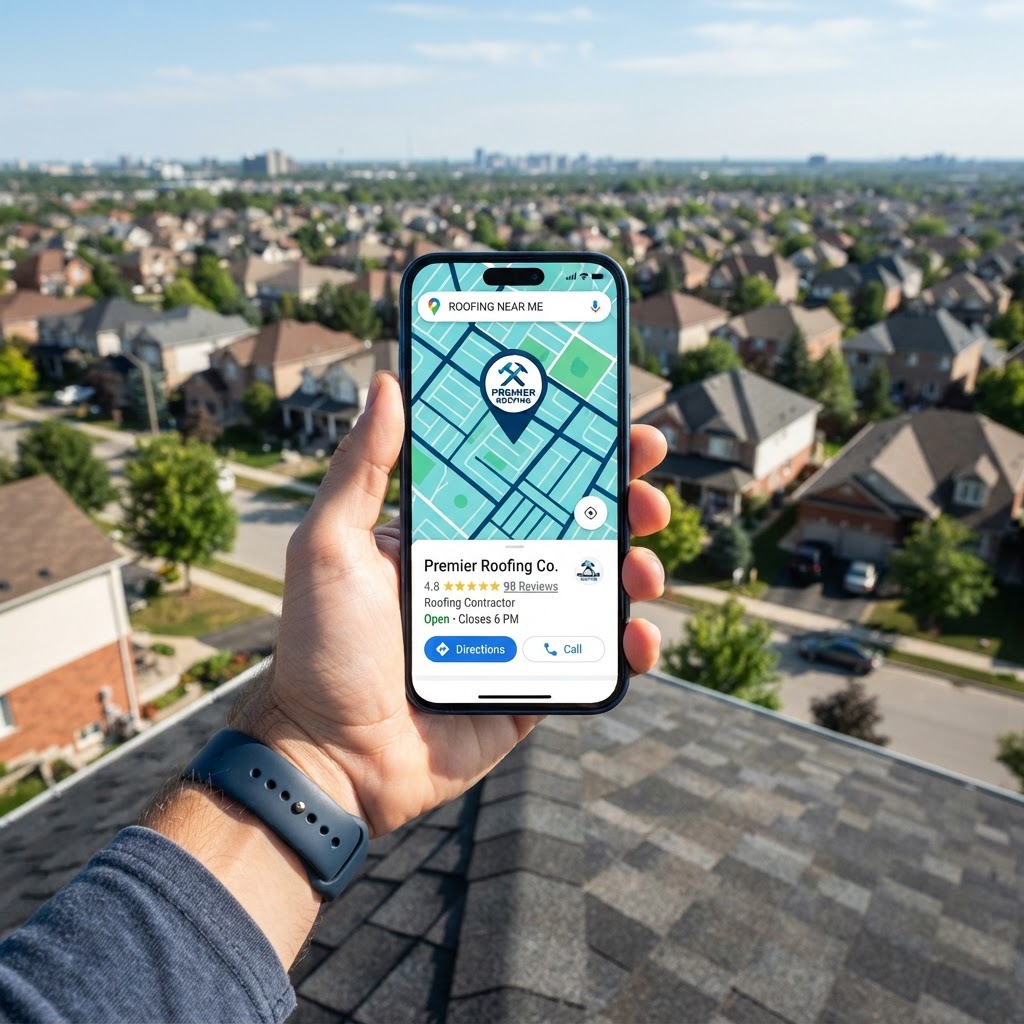
Local SEO ensures your roofing company shows up when homeowners search for "roofing contractor near me" or "roof repair [city]." The three most important local SEO factors are:
- Google Business Profile optimization: Complete every section, add photos, collect reviews
- Local citations: Consistent NAP (Name, Address, Phone) across all directories
- On-page SEO: Location-specific landing pages with roofing keywords
Read our complete guide on local SEO for roofing companies to dive deeper.
3. Roofing Advertising (PPC and Paid Social)
Paid advertising gets you immediate visibility while SEO builds over time. The most effective roofing advertising channels include:
- Google Ads: Target high-intent keywords like "roof replacement," "emergency roof repair," "roofing contractor"
- Facebook/Instagram Ads: Build brand awareness and retarget website visitors
- Local service ads: Appear at the top of Google search results
A well-managed Google Ads campaign for roofing typically costs $50-150 per lead, with conversion rates of 5-15% depending on market and ad quality.
4. Reputation Management
Reviews are the #1 trust signal for homeowners. A roofing company with 50+ reviews and a 4.8-star rating will win more jobs than a competitor with 5 reviews and a 5-star rating.
Strategies to build reviews:
- Ask every satisfied customer for a review
- Send automated review request texts after job completion
- Respond to all reviews (positive and negative) within 24 hours
- Showcase reviews on your website and Google Business Profile
5. Lead Nurture and Follow-Up
Most roofing leads don't convert on the first contact. Research shows it takes 5-12 touchpoints to convert a lead into a customer. Effective lead nurture includes:
- Immediate response (within 5 minutes of lead submission)
- Automated text and email follow-up sequences
- Educational content about roofing materials and processes
- Regular check-ins until the homeowner is ready to decide
Our appointment setting service handles this entire process for roofing contractors.
Roofing Marketing Strategies That Work in 2026
Storm Response Marketing
After a major storm, roofing companies have a 48-72 hour window to capture surge demand. Effective storm response marketing includes:
- Pre-built storm landing pages for each service area
- Geo-targeted Google Ads activated within hours of the storm
- Door-hanger campaigns in affected neighborhoods
- Email/SMS blasts to your customer database
Content Marketing for Roofing
Content marketing builds authority and improves SEO. Roofing content ideas include:
- "How to know when your roof needs replacement"
- "Metal roof vs. asphalt shingles: Which is better?"
- "How much does a new roof cost in [city]?"
- "Insurance claim guide for roof damage"
Each piece of content should target a specific keyword, answer homeowner questions thoroughly, and include a clear CTA to schedule an inspection.
Video Marketing
Video is the most engaging content format for roofing. Homeowners want to see your work, your team, and your process. Effective roofing videos include:
- Before and after roof replacements
- Drone footage of roof inspections
- Customer testimonial videos
- Educational videos about roofing materials
Common Roofing Marketing Mistakes to Avoid
| Mistake | Impact | Solution |
|---|---|---|
| No website or outdated site | Loses 60%+ of potential leads | Invest in a professional roofing website |
| Ignoring Google Business Profile | Missing from local map results | Fully optimize your GBP |
| Buying lead lists | Low-quality, shared leads | Generate exclusive leads through SEO and PPC |
| Slow lead response | Loses 50%+ of leads | Respond within 5 minutes, use automation |
| No review strategy | Low trust and credibility | Systematically collect reviews from every customer |
| Inconsistent marketing | Feast or famine revenue | Maintain consistent marketing spend year-round |
How to Measure Roofing Marketing Success
Track these key metrics to evaluate your marketing performance:
- Cost per lead (CPL): Total marketing spend / number of leads
- Lead-to-job conversion rate: Jobs won / total leads
- Customer acquisition cost (CAC): Total marketing spend / number of jobs won
- Return on marketing investment (ROMI): Revenue from marketing / marketing cost
- Organic traffic growth: Month-over-month increase in website visitors
A healthy roofing marketing program should target:
- CPL under $150 for most markets
- Lead-to-job conversion rate of 15-25%
- ROMI of 400%+ (every $1 spent generates $4+ in revenue)
Building a Roofing Marketing Budget
For roofing companies, we recommend allocating 7-12% of gross revenue to marketing. Here's a sample budget breakdown:
- Website and hosting: 10% of marketing budget
- SEO and content: 25% of marketing budget
- PPC advertising: 35% of marketing budget
- Google Business Profile management: 5% of marketing budget
- Reputation management: 10% of marketing budget
- Software and tools: 15% of marketing budget
Why Partner With a Roofing Marketing Agency
A specialized roofing marketing agency brings industry expertise, proven processes, and dedicated resources. At Contractor Pilot 360, we've helped roofing companies across the country generate more qualified leads, improve their online presence, and scale their businesses.
Our digital marketing services include everything from SEO and PPC to web design and appointment setting. We understand the roofing industry, know what homeowners are searching for, and have the tools and expertise to help you grow.
What to Look for in a Roofing Marketing Agency
- Industry-specific experience (not a generalist agency)
- Transparent reporting with real metrics
- Case studies and client references
- Clear pricing and deliverables
- Integrated services (SEO, PPC, web design, content)
Conclusion
Roofing marketing in 2026 requires a multi-channel approach that combines SEO, advertising, web design, reputation management, and lead nurture. By understanding the customer journey, avoiding common mistakes, and measuring your results, you can build a marketing system that generates consistent, qualified leads year-round.
The most successful roofing companies don't treat marketing as an expense — they treat it as an investment in growth. Start with the fundamentals: a professional website, local SEO, and Google Business Profile optimization. Then layer in paid advertising, content marketing, and reputation management as you scale.
Ready to transform your roofing marketing? Schedule a free strategy call with our team today.
Ready to Scale Your Contractor Business?
Get a free strategy call with our team and learn how we can help you generate more qualified leads.
Frequently Asked Questions

Written By
Contractor Pilot 360 Team
Contractor Marketing Experts
Contractor Pilot 360 is a digital marketing agency specializing in helping roofing and home service contractors generate qualified leads, improve online visibility, and scale their businesses through data-driven marketing strategies.